

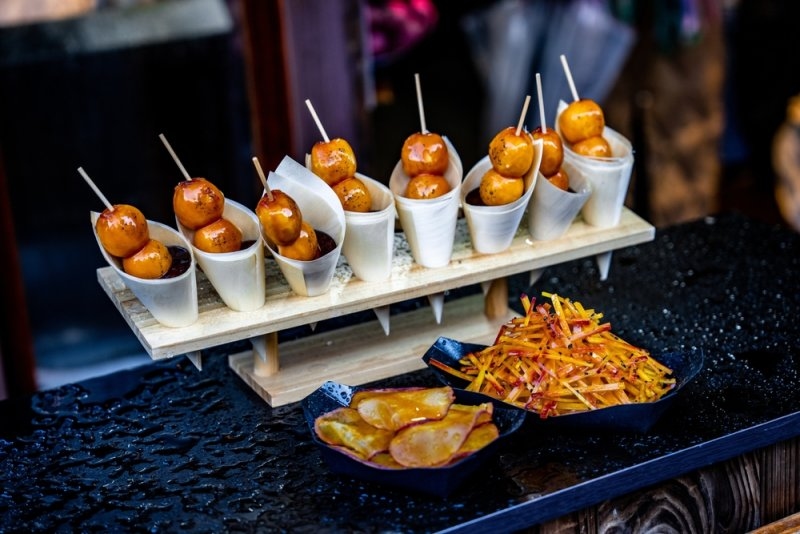
Skip the formal sit-down restaurants and dive into Japan’s busy food stalls, markets, and tiny counter shops. That’s where the real energy kicks in. Street food here is about convenience, satisfying your cravings with bold tastes and great smells—without getting fancy or complicated. Osaka’s snacks are their own thing—straightforward, filling, and always tasty. In Tokyo, you’re faced with every possible option, from long-loved classics to new wave creations.
There’s so much out there, but some things really deserve your attention first. Here, we’re taking a closer look at what Japanese street food has to offer—regional favorites, must-try snacks, and the reasons people keep coming back for more.
Japanese street food is rarely about elaborate presentation. It is hot, quick, portable, and usually prepared where you can see it.
Osaka street food is closely tied to the city’s casual dining culture. Takoyaki, small octopus-filled batter balls, is perhaps the obvious example. They are cooked in round molds, topped with sauce and other garnishes, then served piping hot.
Okonomiyaki is another Osaka street food favorite. The savory pancake can contain cabbage, meat, seafood, or other fillings, depending on the shop. It is heavier than many traditional Japanese snacks, so one portion can be surprisingly filling.
Japanese food to try does not have to mean ordering an expensive restaurant meal. Street stalls offer a faster way to understand regional cooking.
Yakitori is grilled chicken served on skewers, usually seasoned with sauce or salt. Yaki imo, roasted sweet potato, is simpler but particularly comforting in cooler weather. These foods show how Japanese street food can turn ordinary ingredients into something memorable.
Don't Miss: Hirosaki, Japan Travel Guide to Stay and Explore Attractions
The best Japanese street food is not limited to the foods tourists usually recognize. Look slightly beyond the famous names.
Traditional Japanese snacks often focus on texture as much as flavor. Taiyaki, a fish-shaped cake filled traditionally with sweet red bean paste, is a classic example. Modern versions may contain custard, chocolate, or other fillings.
Dango is another traditional Japanese snack. These chewy rice dumplings are served on skewers and may be coated with sweet sauces. They are small, inexpensive, and easy to eat while walking.
Other traditional Japanese snacks worth noticing include senbei rice crackers and imagawayaki, a round filled cake sold hot from the griddle.
Osaka street food works particularly well when you want something substantial rather than just a quick sweet bite. Kushikatsu, skewered and breaded foods that are deep-fried, is one example.
Corn, seafood, vegetables, and meat can all appear on kushikatsu menus. The appeal is straightforward: crisp outside, hot inside, usually eaten immediately.
Street food in Tokyo changes depending on where you eat. Traditional markets, shopping streets, and festival stalls each offer different choices.
Street food in Tokyo is especially noticeable during festivals, when temporary stalls serve grilled meats, noodles, sweets, and drinks. At places such as Asakusa, market-style eating also connects food with older parts of the city.
Yakitori, grilled seafood, and sweet treats are common choices. Portions are generally manageable, which makes street food in Tokyo useful for trying several things instead of committing to one large meal.
Japanese food to try in Tokyo can include melonpan, a sweet bread with a crisp cookie-like exterior, or karaage, Japanese-style fried chicken. Both are easy to carry and eat without much fuss.
For something sweeter, look for kakigori, shaved ice served with flavored syrups. It is particularly popular during warmer months. The presentation can be elaborate, but the basic idea remains simple.
Suggested Reading: Best Time to Visit Japan for Great Weather and Fewer Crowds
There is no single best Japanese street food for every appetite. Texture, price, portion size, and sweetness all change the choice.
| Food | Flavor Profile | Best For | Style |
|---|---|---|---|
| Takoyaki | Savory, saucy | Quick-filling bite | Osaka street food |
| Yakitori | Smoky, salty | Meat lovers | Grilled |
| Taiyaki | Sweet, mild | Dessert | Traditional Japanese snacks |
| Kushikatsu | Crispy, savory | Heavier meal | Fried |
| Dango | Chewy, sweet | Small snack | Traditional Japanese snacks |
| Kakigori | Cold, sweet | Hot weather | Dessert |
This is where Japanese street food becomes interesting. The foods look simple, yet cooking methods create very different textures.
The best Japanese street food for a first visit can be chosen by variety rather than reputation. Try one grilled item, one savory specialty, and one sweet snack.
Takoyaki gives you a taste of Osaka street food culture. Taiyaki introduces traditional Japanese snacks. Yakitori provides something smoky and savory. Together, they show how broad Japanese street food can be.
Traditional Japanese snacks are often smaller than Western-style desserts or meals, which makes sampling easier.
Traditional Japanese snacks include plenty of rice flour and bean-based sweets. Mochi is made from glutinous rice and can be filled or served in different forms. Dorayaki consists of two soft pancakes with a sweet filling, commonly red bean paste.
These are not necessarily street foods in every setting, but they frequently appear in markets, shopping areas, and specialty stalls. That overlap is part of what makes Japanese street food culture so varied.
Japanese food to try is easiest to explore when portions are shared. Order one or two items, split them, then move to another stall.
It prevents food waste and lets you compare textures. Crispy kushikatsu beside soft taiyaki, for example, gives a much clearer picture of the range within Japanese street food than ordering several similar dishes.
Japanese street food works because preparation is visible, portions are practical, and flavors are usually direct. A sizzling grill, a tray of freshly cooked takoyaki, or a stack of warm traditional Japanese snacks creates an immediate connection between cooking and eating.
Street food in Tokyo can feel polished; Osaka street food often feels more casual and hearty. Both still share the same basic appeal: food made quickly, served hot, and meant to be enjoyed without ceremony.
For travelers, that simplicity is useful. The best Japanese street food does not require a long explanation before you understand why people keep coming back.
Also Read: The Somei Yoshino | Japan’s Imperialism by Cherry Blossoms
Street food gives you a real glimpse into everyday Japanese eating. Osaka goes heavy with rich, filling dishes. Tokyo pours on the variety—every market and neighborhood has something different. There’s grilled, fried, sweet, chewy, and always something new to catch your eye. Funny thing? The best street food isn’t always the dish you saw in a guidebook. Sometimes, it’s a fresh snack that grabs your attention, and before you know it, it’s gone before you even reach the next street corner.
If you stick to busy stalls where food moves fast and gets cooked fresh, you’re usually good. Food hygiene still counts—especially when seafood’s involved or something’s been sitting out.
You’ll find some options, though they’re limited—many snacks use seafood, meat, or fish-based broths. Always ask about the ingredients and how things are made.
There are different prices depending on the city, the place, and the items. Small-sized portions are sometimes quite inexpensive and may be more expensive for larger portions or specialty foods.
Some larger or more permanent stalls take credit cards or mobile payments, but plenty of small vendors still prefer cash. Having some yen in your pocket helps.
There’s no single start time. Markets and shopping streets might open up early, festival stalls often match the event schedule, and nighttime food spots sometimes stick around late into the evening.
This content was created by AI