

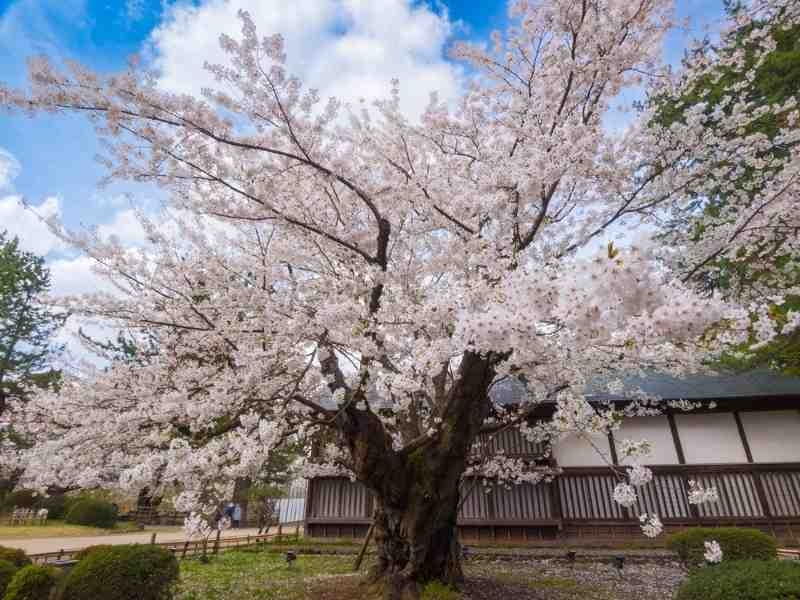
Somei Yoshino cherry blossoms are the most common cherry trees seen across Japan today. They define how spring looks and feels in cities, parks, and public spaces. Most people see them as natural, but their story is more structured than it appears.
This blog will explain the Japanese cherry blossoms meaning and connect it with the history of Sakura, Japan.
Must Read: Top Japan Travel Mistakes 2025 Tourists Must Avoid
Cherry blossoms are often linked with the idea that life is short and always changing. The flowers bloom fully, stay for a brief moment, and then fall without warning. That simple pattern shaped how people see time, beauty, and even loss.
This meaning stayed consistent for generations. It appeared in poems, paintings, and everyday conversations. People did not need long explanations to understand it. The feeling was direct and clear, which made it easy to pass on.
Still, the meaning did not remain untouched. Over time, it was shaped by larger forces that wanted to guide how people think. It slowly moved from personal reflection to something that could also serve a broader purpose.
You can check below to understand the different elements of the Sakura history of Japan:
Cherry trees grew in many forms across different regions in earlier times. Each place had its own variety, and the blooming patterns were not the same everywhere. This created a sense of local identity, where nature felt slightly different depending on the location.
Growers later created a tree that could bloom in a consistent way. This made it easier to manage and plant across large areas. The focus shifted from variety to uniform beauty, which made the experience predictable and easier to organize.
These trees were planted in schools, parks, and along roads. This was not random. It helped create a shared visual experience for people living in different areas. The same trees, the same bloom, the same feeling, repeated across regions.
As one type became dominant, many natural varieties were pushed aside. This reduced the range of cherry trees people could see. It changed the way people understood spring, turning a diverse season into a more uniform one.
There is a reason these trees remain popular even today. The appeal is not complicated, yet it connects with people on different levels without much effort.
The petals are light in color, almost white with a hint of pink. This creates a peaceful look that does not feel heavy or distracting. It allows people to enjoy the view without feeling overwhelmed.
These trees bloom at nearly the same time across wide areas. This creates a shared moment where people experience the same change together. It feels collective, even if people are in different cities.
The blooming period does not last long. Because of this, people feel the need to see it before it disappears. That limited time adds value to the experience without needing any extra effort.
The symbolism of cherry blossoms did not stay fixed. It changed as society changed. What started as a reflection of life’s short nature later took on a more structured meaning.
In certain periods, the falling petals were linked with ideas of sacrifice and duty. This interpretation was used to shape how people viewed their role in society. It was not forced in an obvious way, but it was present in education and cultural messaging.
This is where the meaning becomes layered. It still represents beauty and change, but it also carries traces of how it was used in the past. That mix makes it both simple to understand and deeper than it first appears.
The spread of these trees went beyond local use. They were planted in areas influenced by Japan during its expansion period. This was not just about decoration. It was part of shaping the environment in a subtle way.
By planting the same trees in different regions, a familiar landscape was created. It made new places feel connected to a central identity. This approach worked quietly, without direct force, but it still carried meaning.
The link to Japanese imperial history shows how cultural elements can be used to influence perception. It was not always obvious, but it was effective. A tree, placed in the right setting, could carry a message without words.
Cherry blossoms still hold strong importance today. They are part of seasonal traditions, public gatherings, and everyday experiences. People continue to gather under blooming trees, keeping the practice alive without much change.
The Sakura's cultural significance today connects past ideas with present life. It allows people to experience tradition in a simple way, without needing to study history in detail. The connection feels natural, even though it has layers behind it.
There is also a growing awareness of the need to appreciate different types of cherry trees. This shift brings attention back to diversity and helps balance the uniform image created over time.
Somei Yoshino cherry blossoms represent both natural beauty and careful planning. Their story connects culture, identity, and history in a subtle way. Understanding this balance allows people to see beyond the surface and appreciate their deeper role in shaping shared experiences and seasonal traditions.
Somei Yoshino cherry blossoms are recognized for their similar shape and flowering pattern. All trees of this type are similar in shape, and they bloom at similar times. This makes for a similar seasonal experience that can be recognized and appreciated anywhere.
The message of the cherry blossoms still reminds people to appreciate life, as life is short and needs to be appreciated. This message is still reflected in people’s attitudes toward time and change, and people still encounter it in their lives without having to explain it in detail.
The history of Sakura in Japan explains how cherry blossoms became a cultural icon in Japan. It explains how nature was molded to become a common experience. By understanding this, people are able to look beyond the surface and appreciate what is beneath.
This content was created by AI